
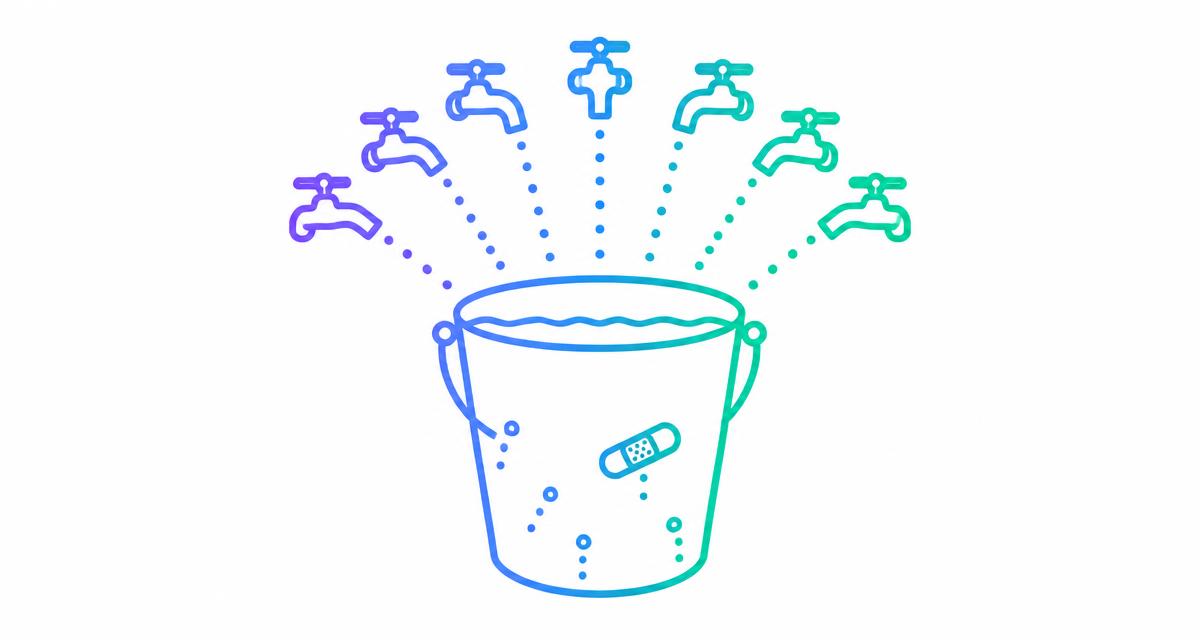
Picture your sales process as a bucket. Every channel, cold email, LinkedIn, calling, referrals, is a different tap pouring water into it. The water is leads. What you actually want is a full bucket: signed deals.
Most Indian SME founders spend their energy choosing which tap to pour from. Cold email or LinkedIn. Calling or content. They compare flow rates and argue about which one fills the bucket fastest.
Almost none of them check the bucket for holes.
And most Indian SME sales buckets have several. An enquiry sits unanswered for four days. That's a hole. A follow-up depends on one salesperson remembering to send it. That's a hole. Nobody logs which channel actually produced the last closed deal, and that's a hole you can't even see until the bucket is empty again.
So founders keep opening taps wider, when the real fix is patching the bucket.
This guide does two things most comparisons don't. First, it walks through the seven taps available to Indian B2B teams in 2026: what each one costs, how fast it fills the bucket, and what effort it takes to keep running. Second, and more importantly, it shows you exactly where the holes tend to form, because a stronger tap poured into a leaking bucket is just a faster way to lose water.
Seven taps, one bucket
Before comparing them side by side, it helps to walk through what each tap is actually like to run, because the numbers alone don't tell you where the leaks start.
1. Cold email: the wide, steady tap
Cold email is still the most scalable way to pour leads into an Indian B2B pipeline, and it's cheap per contact compared to almost everything else. But the tap needs priming: 2 to 3 weeks of domain warm-up, small verified batches of 200 to 500 contacts, and tools like Apollo for the list, Instantly for sending, and Zoho CRM to track what happens next.
The leak is almost always the same one. A founder sends one email, hears nothing, and calls the channel dead. But most replies in cold outbound come on the second, third or fourth touch. A single email isn't a tap running dry, it's a tap someone turned off after one drop. More on this in our cold email diagnostic.
2. LinkedIn: the precise, narrow tap
If cold email is a wide tap, LinkedIn is a narrow one aimed exactly at the person you want: a founder, a CXO, a head of function you can find and message directly. Built through LinkedIn Sales Navigator and run as a connect-then-converse sequence at a steady 20 to 30 requests a day, it's often the fastest route to a real conversation.
The leak: pitching in the very first message, which closes the tap almost as fast as it opened. The second, quieter leak is going silent after someone replies "let's connect sometime", a half-open tap that never gets followed up.
3. Cold calling and WhatsApp: the tap you have to hold open
India is still a phone-first market, and for manufacturing, logistics and owner-run businesses that never check email, this tap pours faster than any other. It needs a script, a clean list and 3 to 5 touches per prospect, with WhatsApp used as a follow-up nudge after a call rather than a cold opener, and always within TRAI's DND rules.
The leak is structural: call outcomes live in someone's head or a notebook instead of a system. The moment that person is busy, sick or gone, the water stops, and nobody notices until the bucket runs low.
4. Referrals and partnerships: the tap you don't control
Referrals feel free because no campaign produced them, but that's also why they can't be scheduled. We've written before about why leaning on them as a strategy backfires: B2B referrals fail: build an outbound engine instead. Partnerships with complementary agencies or vendors are the more deliberate version of the same tap.
The leak: treating an unpredictable tap as your main water source, so growth rises and falls with who happens to mention your name that month.
5. SEO and content: the slow-fill tap
This tap takes the longest to open, usually 4 to 6 months of consistent publishing before it pours anything meaningful, but once it's flowing it barely costs anything per lead. It works best aimed at bottom-funnel topics: comparisons, pricing pages, "how to choose" guides, not broad awareness posts nobody acts on.
The leak: a reader arrives, finishes the article and leaves with nowhere to go. Every post needs a next step built in, like a link to pricing or a relevant case study, otherwise the water pours in and evaporates before it reaches the bucket.
6. Events and webinars: the burst tap
Events pour a lot of water very quickly: a room or a webinar full of warm conversations in a single afternoon, but at a much higher cost per drop than any other channel.
The leak is famous and still ignored constantly: the week after. Without fast, specific follow-up, an event lead cools within days and the burst is wasted.
7. Paid ads: the metered tap
LinkedIn and Google Ads can start pouring within weeks, but you pay for every drop, so a vague offer gets expensive fast. A sharp offer and a dedicated landing page make this tap worth running. Realistic starting budgets on LinkedIn run from ₹50,000 a month.
The leak: paying to generate the lead, then losing it to a slow or generic reply. The most expensive kind of hole there is.
The seven taps, side by side
Once you can see where each one tends to leak, the comparison actually means something.
| Channel | Approx. monthly cost | Time to first meeting | Effort | Best for | Where it usually leaks |
|---|---|---|---|---|---|
| Cold email outbound | ₹15,000 to 60,000 | 3 to 5 weeks | Medium | Defined ICP, one clear offer | Stopping after one email |
| LinkedIn outreach | ₹10,000 to 40,000 | 1 to 3 weeks | Medium to high | Senior decision-makers | Pitching too early, going quiet |
| Cold calling and WhatsApp | ₹20,000 to 80,000 | 1 to 2 weeks | High | High-ticket, regional deals | Outcomes never logged |
| Referrals and partnerships | Low cash, high time | 2 to 8 weeks | Medium | Trust-led services | Unpredictable, not scalable |
| SEO and content | ₹25,000 to 1,00,000 | 4 to 6 months | Medium, compounding | Long research cycles | Traffic with no next step |
| Events and webinars | ₹30,000 to 2,00,000 per event | 1 to 3 months | High | Enterprise, relationship-led | No follow-up after the event |
| Paid ads | ₹50,000+ | 2 to 4 weeks | Medium | Funded teams, sharp offers | Slow reply after the click |
Look at that last column again. Every single leak is a follow-up problem, not a traffic problem. Not one of the seven taps fails because the water wasn't flowing.
Why founders keep opening new taps instead of fixing the bucket
Opening a new tap is visible: a campaign, a post, an ad, something you can point to. Patching a hole is invisible. Nobody sees the follow-up email that didn't get sent, the lead that went three days without a reply, or the call outcome that lived in someone's head and left with them.
So the instinct is always to add another tap: try Instagram, hire another SDR, run another ad. The bucket stays exactly as leaky, just with more water pouring toward the same holes. It shows up as the same handful of complaints in almost every SME we talk to:
- Leads arrive, but few turn into meetings because follow-up is slow or one-touch.
- Leads go cold fast because no one owns the next step.
- Nobody can say what's actually working because outcomes aren't logged anywhere.
- The team has no time to chase because sales follow-up is somebody's side job, not their whole job.
- Past agencies delivered names, not deals because the handoff ended the moment the lead arrived.
Every one of those is a hole in the bucket. None of them is fixed by a new tap.
Patching the bucket instead of widening the tap
A lead generation company is, by design, in the business of taps. It's paid to pour water, leads, names, contacts, and its job usually ends the moment that water lands in your inbox. What happens after is your problem.
That's the part we build for. AI sales automation, the way we run it, isn't another tap, it's the patch. It handles the repetitive parts that cause most leaks: sending the second and third follow-up on schedule, reminding someone before a lead goes cold, and logging every call outcome and reply automatically instead of leaving it in someone's memory.
But automation left alone creates its own kind of leak: generic, robotic follow-up that quietly damages the relationship it's supposed to protect. That's where human governance comes in. People review the messaging, set the rules for what gets sent and when, and step in personally on the replies that need judgment rather than a script. We go deeper on this in why AI for sales needs human-in-the-loop governance.
The result isn't a faster tap. It's a bucket that actually holds what you pour into it, which is what turns a lead into a meeting, and a meeting into revenue.
Choosing your tap: a 4-question framework
The channel comparison only matters once you know which tap fits your situation. Ask these four questions before you commit.
- How fast do you need meetings? Under 30 days points to LinkedIn, calling or paid ads. Six months or more leaves room for SEO to build up.
- What's your deal size? Above ₹5 lakh, calling, LinkedIn and events pay for themselves easily. Below ₹50,000, email and SEO carry a lower cost per lead.
- Where does your buyer actually pay attention? A CXO may live on LinkedIn. A factory owner lives on WhatsApp and the phone.
- Who owns follow-up? If the honest answer is "whoever has time", that's a hole worth patching before you open any new tap at all.
A practical starting point for most SMEs: one outbound tap (email or LinkedIn) plus one compounding tap (SEO or referrals). Run both for 90 days, track meetings booked per ₹10,000 spent, and cut whichever one isn't pulling its weight.
What to watch so you catch leaks early
Tracking the right numbers is how you tell a slow tap from a leaking bucket.
- Cost per meeting booked, not cost per lead
- Positive-reply rate
- Time from first reply to your response
- Meeting-to-opportunity conversion
- Percentage of leads that received a full follow-up sequence, start to finish
That last one is the metric almost nobody checks, and it's usually the one that explains everything else on the list.
Frequently asked questions
What is the best B2B lead generation channel for SMEs in India?
There is no single best channel. Cold email and LinkedIn suit teams that need meetings within weeks, SEO suits long sales cycles, and cold calling suits high-ticket or regional deals. Most SMEs do best pairing one outbound channel with one compounding channel, then measuring cost per meeting booked rather than cost per lead.
How much does B2B lead generation cost in India?
Typical small-team budgets run from roughly ₹10,000 to ₹80,000 a month for outbound channels, ₹25,000 to ₹1,00,000 for SEO and content, and ₹50,000 or more for paid ads. Events cost more per instance. These are indicative ranges and vary by sector, list quality and deal size.
How long does it take to get the first B2B meeting?
Calling and LinkedIn outreach can produce meetings in 1 to 3 weeks. Cold email usually takes 3 to 5 weeks because domains need 2 to 3 weeks of warm-up first. SEO typically takes 4 to 6 months before inbound traffic becomes meaningful.
Is cold email effective for B2B sales in India?
Yes, when it's run carefully: verified lists, separate sending domains, gradual volume and multi-touch follow-up. It usually fails through poor deliverability or stopping after a single email rather than through the channel itself. Check current data-protection and telecom rules that apply to your outreach, and get legal advice if you're unsure.
Which is better for Indian B2B: cold email or LinkedIn?
LinkedIn is faster for reaching named senior decision-makers directly. Cold email scales further at a lower cost per contact. Many teams run both: LinkedIn for high-value accounts, email for broader coverage.
What is the difference between lead generation and AI sales automation?
Lead generation focuses on delivering names and contact details. AI sales automation focuses on what happens after: sequencing follow-ups, sending reminders, logging every touch and keeping the process moving so leads actually turn into meetings. The goal shifts from volume of leads to meetings booked.
Will AI sales automation make outreach feel robotic?
It can, if it runs without oversight. Human-governed automation avoids this by having people review the messaging, set the rules and personally handle replies that need judgment, while automation handles the repetitive scheduling and follow-up work.
Why do B2B leads go cold so quickly?
Usually because no one owns the next step. A slow first response, a single follow-up and outcomes that are never logged all let interest fade fast. A defined follow-up sequence with clear ownership fixes most of it.
How many follow-ups does a B2B prospect need?
Many B2B replies come after the second to fourth touch, so a sequence of 3 to 5 touches across email, LinkedIn and phone is a reasonable starting point. Adjust it based on how your own buyers actually respond.
Can a small team run B2B outreach without an agency?
Yes. A small team can run one channel using tools like Apollo, Instantly and Zoho CRM. The harder part is consistency, since follow-up and tracking take steady time every week. Teams often bring in automation or a partner specifically to cover that part.
What metrics should SMEs track for B2B lead generation?
Track cost per meeting booked, positive-reply rate, time to first response, meeting-to-opportunity conversion, and the percentage of leads that received a full follow-up sequence. These show whether the process is working, not just whether leads are arriving.
The takeaway
There's no single best tap for B2B lead generation in India. There's only the tap that fits your buyer, your deal size, and how much you can realistically keep running.
But no tap matters if the bucket underneath it is full of holes. Generating a lead is the easy part. Following up consistently, and governing that process so it stays accurate and human, is what actually turns water into something you can use.
Curious what a patched bucket looks like in practice? See a real example in our case study, or see how engagements are scoped on our pricing page.
Where does your bucket leak most: lead quality, follow-up, or tracking?
Tell us on WhatsApp, or book a free 30-minute Sales Diagnostic. We will find the holes in your pipeline and give you a straight recommendation.
Book your free Sales Diagnostic →